If you’ve ever watched a betting line move 1.5 points in seconds and wondered “what just happened?” — you likely witnessed a steam move.
Steam moves are one of the most misunderstood concepts in sports betting. Some bettors chase every sharp line move. Others ignore them entirely. The truth lies somewhere in between.
In this guide, we’ll break down exactly what steam moves are, why they happen, and how smart bettors use them to find value in 2026.
What is a Steam Move in Sports Betting?
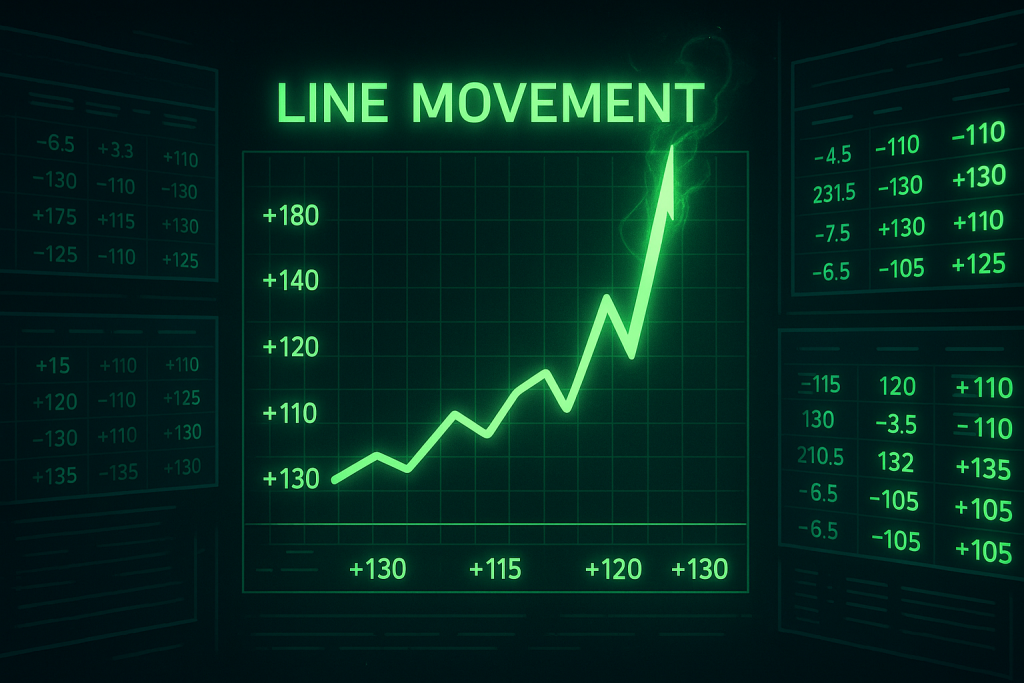
A steam move is a sudden, drastic, and uniform line movement across multiple sportsbooks at the same time. Unlike gradual line shifts caused by regular betting action, steam moves happen fast — often within seconds or minutes.
Example: The Lakers open as 4-point favorites at every major sportsbook. Within 30 seconds, the line moves to Lakers -5.5 across FanDuel, DraftKings, BetMGM, and Caesars simultaneously.
That’s a steam move.
Why Are They Called “Steam” Moves?
The term comes from the idea of a locomotive building up steam before moving forward quickly. When sharp money hits, the line builds pressure and then moves rapidly in one direction.
What Causes Steam Moves?
Steam moves don’t happen randomly. They’re triggered by specific forces in the betting market:
1. Sharp Syndicate Action
Professional betting syndicates — groups that pool money and share information — often coordinate large bets across multiple sportsbooks simultaneously. When they act, every book adjusts instantly to limit their exposure.
These syndicates employ full-time analysts, data scientists, and sometimes inside information. When they find a line that’s off by even half a point, they move quickly.
2. Respected Sharp Money
Sportsbooks track which bettors consistently win. These “sharp” accounts get special attention. When a known sharp puts $20,000 on a game, the book doesn’t wait to see if the public agrees — they move the line immediately.
A single respected bettor can trigger a steam move if their account carries enough weight.
3. Breaking News
Injury updates, lineup changes, or weather news can cause steam moves when the information isn’t yet priced into the market. If a starting quarterback is ruled out 30 minutes before kickoff, you’ll see immediate, dramatic line movement.
4. Arbitrage Correction
Sometimes oddsmakers at one book make a mistake and post a line that’s out of step with the market. Sharp bettors exploit this instantly, causing the line to “steam” back to where it should be.
How to Identify a Steam Move
Not every line movement is a steam move. Here’s how to distinguish real steam from normal market action:
Signs of a Genuine Steam Move:
- Speed: The line moves within seconds or minutes, not hours
- Uniformity: Multiple sportsbooks adjust at the same time
- Size: The move is significant (1+ points on spreads, 20+ cents on moneylines)
- No obvious news: The move happens without any public information trigger
Signs It’s NOT a Steam Move:
- Gradual shift: Line moves slowly over several hours
- One book only: Only one sportsbook has adjusted
- Public betting pattern: Heavy action on a popular team causing natural movement
- News-driven: Obvious injury or weather update explains the change
Tools for Tracking Steam Moves
To catch steam moves in real-time, you need the right tools. Here are the best options in 2026:
Line Shopping Software
Tools like OddsJam, Outlier, and AVO track lines across multiple sportsbooks in real-time. When you see simultaneous movement, you’re watching a steam move unfold.
Line Movement Alerts
Some +EV betting tools offer alerts when sharp line movement occurs. This can help you catch steam moves before slower books adjust.
Twitter/X Communities
Many sharp bettors and betting communities post steam alerts in real-time. Following the right accounts can give you early warning.
Should You Chase Steam Moves?
This is the million-dollar question. And the honest answer: it depends.
The Case FOR Chasing Steam
- Sharp money wins long-term: Professional bettors and syndicates don’t survive by losing. If they’re moving a line, they likely have information or analysis that justifies it.
- You’re betting with the smart money: Even without knowing WHY the line moved, you’re aligning with bettors who do their homework.
- Market inefficiencies exist: Slower sportsbooks sometimes take minutes to adjust, giving you a window to capture value.
The Case AGAINST Chasing Steam
- The value is often gone: By the time you see a steam move and get your bet down, the line has already moved. You’re getting the new price, not the original value.
- Not all steam is equal: Some steam moves are false signals or “steam games” designed to manipulate the market.
- You’re competing with algorithms: Professional bettors use automated systems to capture steam value in milliseconds. As a manual bettor, you’re already behind.
- Limits get you fast: If you consistently chase steam at slow books, you’ll get limited quickly.
The Smart Approach
Rather than blindly chasing every steam move, use them as one data point in your analysis:
- Use steam as confirmation: If your own research points to one side and then sharp money agrees, that’s a strong signal.
- Focus on opening lines: Some of the best value comes from betting against steam moves at opening lines that haven’t moved yet. If you can bet an off-market line before the steam hits, you capture the value.
- Track originating books: Some sportsbooks are known as “sharp” books (Pinnacle, Circa, BetCRIS). When they move first, the steam is more meaningful than when it originates from a recreational book.
- Understand the sport: Steam moves in NFL carry different weight than steam in college basketball. The more efficient the market, the more significant the steam.
Steam Moves vs. Reverse Line Movement
Don’t confuse steam moves with reverse line movement (RLM) — they’re related but different concepts.
Steam Move: Sharp money causes the line to move dramatically in a short time.
Reverse Line Movement: The line moves OPPOSITE to where the public money is going. For example, 75% of bets are on the Lakers, but the line moves from Lakers -5 to Lakers -4.
RLM suggests sharp money is on the other side, outweighing the public action. Steam moves are about speed and uniformity — the direction is obvious and dramatic.
Both are useful signals, but they tell different stories about what’s happening in the market.
For a deeper dive into line movement, check out our guide on how to read line movement and understand sharp money.
Common Mistakes When Using Steam Moves
Mistake #1: Chasing Every Move
Not every steam move is profitable. Some are traps, some are overcorrections, and some happen after the value is already gone.
Mistake #2: Ignoring Closing Line Value
The true measure of a bet’s quality is whether you beat the closing line. If you chase steam but consistently get worse numbers than the close, you’re not finding edge.
Understanding closing line value (CLV) is essential for evaluating your steam-chasing results.
Mistake #3: Using Only One Source
If you’re tracking line movement through a single sportsbook app, you’re missing the market-wide picture. Use tools that aggregate lines from 20+ books.
Mistake #4: Betting More Than You Should
Steam moves feel urgent. That urgency leads to over-betting. Stick to your bankroll management strategy regardless of how confident a steam move makes you feel.
How Sportsbooks React to Steam
Understanding the sportsbook perspective helps you anticipate how the market will behave:
- Instant adjustment: Most major books have algorithms that detect coordinated betting action and adjust lines automatically.
- Limit sharp accounts: Books track which accounts consistently bet into steam moves early. These accounts get limited fast.
- Originate their own lines: Sportsbooks like Pinnacle let sharps bet higher limits because they want the information. They use sharp action to set better lines.
- Create delay for recreational books: Some recreational-focused books intentionally lag behind sharp books to avoid being “steamed” by bettors watching line movement.
This is also why you might get limited by sportsbooks if you consistently bet with sharp money.
Putting It All Together: A Practical Steam Move Strategy
Here’s a framework for using steam moves effectively in 2026:
Step 1: Do Your Own Research First
Never let steam moves replace your analysis. Form your own opinion on a game before checking line movement.
Step 2: Use Line Shopping Tools
Track lines across multiple books. Look for movement patterns, not just individual shifts.
Step 3: Weight the Steam Appropriately
- Opening lines at sharp books moving = highly significant
- Mid-day movement at recreational books = less significant
- Movement right before game time = often public money, not sharp action
Step 4: Act Quickly if You’re Going to Act
If you decide to bet with steam, you need to be fast. The value window is measured in seconds, not minutes.
Step 5: Track Your Results
Keep detailed records of when you bet with steam vs. against it vs. independently. The data will show you whether steam-chasing adds to your edge.
The Bottom Line
Steam moves are a valuable signal in sports betting — but they’re not a magic bullet.
The best bettors use steam as one input among many. They combine line movement analysis with their own research, closing line value tracking, and disciplined bankroll management.
If you’re consistently profitable betting with your own analysis, steam moves can help confirm your edge. If you’re chasing steam hoping to shortcut the work — you’re likely to get limited before you get rich.
Want to learn more about finding edges in sports betting? Check out our guides on +EV betting strategy and why your +EV betting might not be working.
Related Articles
- Live Betting Strategy 2026: Complete In-Play Guide
- Sharp vs Soft Sportsbooks: Where to Find Value
- Closing Line Value (CLV) Explained: Complete Guide for Sports Bettors
- How to Read Line Movement: Understanding Sharp Money
- Line Shopping Guide 2026: How to Find the Best Odds
- Best +EV Betting Software Compared 2026
- Bankroll Management: Complete Guide to Unit Sizing