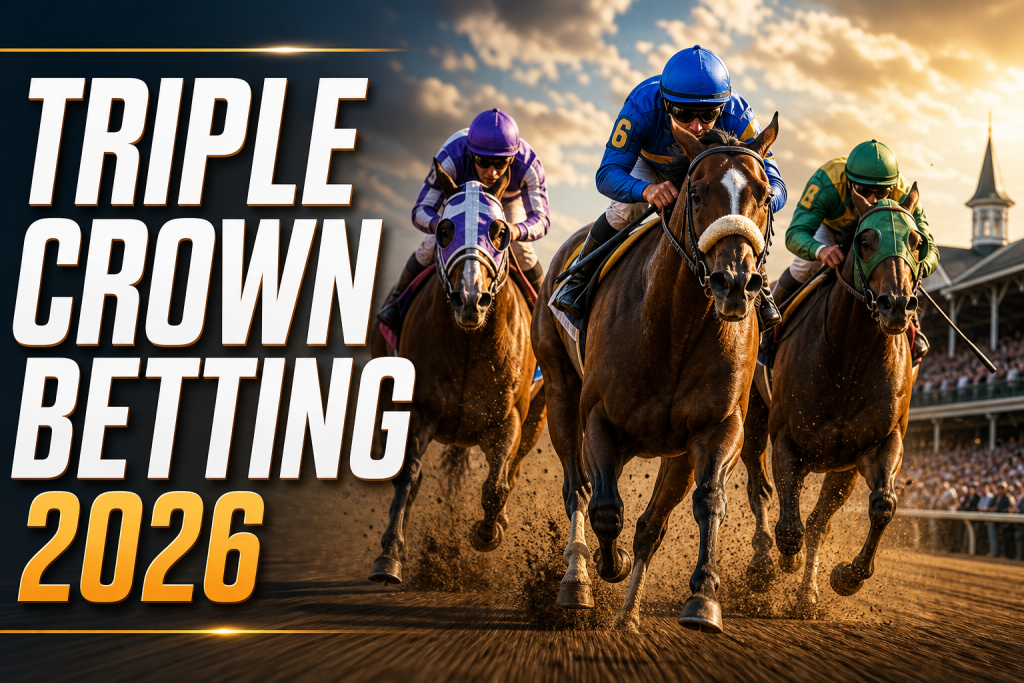
The Kentucky Derby is in the books, the dirt has settled at Churchill Downs, and a lot of bettors immediately put the Triple Crown out of their head until next May. That’s a mistake. The Preakness Stakes (Saturday, May 16, 2026) and the Belmont Stakes (Saturday, June 6, 2026) are two of the most structurally bettable races on the entire calendar — partly because the public’s attention has already moved on, and partly because the fields are smaller, the form is sharper, and the prices are easier to read than the 20+ horse chaos of the Derby.
This guide walks through how sharp horseplayers actually approach the back half of the Triple Crown: how the 2026 Preakness lines up, why Belmont is a completely different race, where the value lives in each pool, and how to structure your bankroll across the next five weeks.
The 2026 Preakness Stakes: Date, Venue, and Field
The 151st Preakness Stakes runs Saturday, May 16, 2026 at Laurel Park in Laurel, Maryland. Note the venue: Pimlico Race Course is mid-renovation through the 2026 racing year, so the middle jewel of the Triple Crown has moved to Laurel for this season only. The race is still the Preakness — Grade 1, $2 million purse, 1 3/16 miles on the dirt — but the track shape and surface profile are different enough that you should be careful about leaning on Pimlico-only historical data.
Field size matters here. The Derby goes off with up to 20 starters; the Preakness typically draws between 8 and 13. That’s a structurally cleaner race. Fewer horses means less traffic, less pace chaos, and a much higher chance the best horse on paper actually gets a clean trip. It also means exotic payouts compress — there are simply fewer combinations.
The current Preakness future-wager favorite is Renegade at +1000 in the Maryland Jockey Club’s first pool, with a number of the Derby’s top finishers expected to ship in once their connections decide on the two-week turnaround. The Derby winner’s trainer always faces the same question: run back in two weeks and chase the Triple Crown, or skip and aim at the Belmont fresh. In each of the last three years, that decision has fallen on the side of skipping — which is exactly why the Preakness has produced so many overlay payouts since 2023.
Why the Preakness Is a Different Bet From the Derby
1. The Two-Week Turnaround Filters the Field
Running back in two weeks at the Grade 1 level is hard on a three-year-old. Most top-tier Derby horses won’t do it unless their connections believe the form is real and the horse came out of the Derby clean. That self-selection effect means the Preakness field is often shorter, fitter, and tactically tighter than the Derby field. It also means horses skipping the Derby (the “fresh” runners) become structurally interesting — they’ve had five-plus weeks of rest while their rivals were running 10 furlongs in front of 150,000 people.
2. The Distance Is Slightly Shorter
The Preakness is 1 3/16 miles versus the Derby’s 1 1/4 miles. That sounds like a small change, but for closing-style horses it’s meaningful — you have 110 fewer yards to make up ground. Pace pressers and tactical speed types tend to outperform deep closers at Preakness distance. If you’re handicapping pace, that’s the structural angle to lead with.
3. The Public Is Less Educated
This is the big one. The Derby pool is full of casual money chasing horses they’ve heard of on TV. By the Preakness, two weeks later, most of that casual public has gone back to NBA Playoff parlays and MLB run lines. The pool is smaller, the public is sharper, but the betting bias is still real — horses with name recognition from the Derby (especially those who finished 4th-8th and look “due”) get heavily backed. Horses who skipped the Derby and are coming in fresh often get overlooked.
This is the same logic that drives closing line value in traditional sports betting: when the public is concentrated, the value lives away from the consensus.
How to Bet the 2026 Preakness Stakes
Straight Wagers
Win, place, and show all live. Unlike the Derby — where show betting on the favorite is one of the worst plays on the card — the Preakness’s smaller field actually makes show betting more reasonable. Take that “more reasonable” with caution though. Show on a 3-1 favorite still has roughly 17% takeout eating your edge. Use straight win bets on horses you genuinely think are mispriced, and skip the show pool entirely on chalk.
Exotics
- Exacta: Picking the top two in order. With a 10-horse field, the math is dramatically friendlier than the Derby’s 20-horse exacta. A reasonable exacta strategy: key your top horse on top, then spread to three or four logical second-place finishers underneath.
- Trifecta: Top three in order. Trifectas in 8-12 horse fields are where the Preakness’s best ROI lives. Expected payouts are smaller than the Derby trifecta, but your hit rate on a well-constructed ticket is meaningfully higher.
- Superfecta: Top four in order. Lower-priced ticket cost, but with smaller fields the payouts tighten too. Only play if you have a real read on a 10-1+ horse you can include in 2nd or 3rd.
- Pick 3 and Pick 4: The multi-race wagers anchored by the Preakness are excellent vehicles if you’ve handicapped the full Laurel card. Sequences create structural overlays because the public almost never plays them seriously.
Future Wagers
The Maryland Jockey Club’s Preakness Future Wager pools open weeks before the race. Renegade is currently +1000, which is structurally fair given his Derby positioning. Future bets lock in price but expose you to scratches — if your horse doesn’t run, you lose. Sharps generally only take Preakness futures at 20-1 or higher, where the price compensates for scratch risk.
The Belmont Stakes: A Completely Different Race
The Belmont Stakes runs Saturday, June 6, 2026 at Saratoga Race Course (the Belmont Park redevelopment continues, so Saratoga is hosting through 2027). It’s the third jewel of the Triple Crown — and it punishes anyone who tries to bet it the same way they bet the Derby and Preakness.
The Distance Changes Everything
The Belmont is traditionally 1 1/2 miles — the longest race most American three-year-olds will ever run. In 2024 and 2025, the Saratoga-hosted Belmont was contested at 1 1/4 miles due to track configuration, but the 2026 edition is back to the full 1 1/2-mile classic distance. That extra quarter-mile is a different sport. Speed horses who looked dominant at 1 3/16 miles in the Preakness can absolutely fall apart at 12 furlongs. Closers and turf-bred dirt horses suddenly have advantages they didn’t have in May.
The Field Composition Shifts
Three categories of horse show up to the Belmont:
- The Triple Crown attempt (only if the same horse won both the Derby and Preakness — rare).
- The “rested” closers who skipped one or both of the first two legs and are aiming at this distance specifically.
- The European/Japanese turf-influenced runners who occasionally take a shot at the Belmont because the distance suits their pedigree.
This last group is where Belmont overlays often live. Pedigree handicappers who can identify a stamina-rich pedigree at 15-1 or higher are often working with structural value the broader market doesn’t price correctly.
How to Structure Your Bankroll Across the Triple Crown
Most casual horseplayers blow their entire Triple Crown bankroll on the Derby. That’s exactly backwards. Here’s a more disciplined allocation, assuming a $500 Triple Crown bankroll:
- Kentucky Derby (already run): 40-50% of bankroll deployed in advance. Highest pool size, most public money, biggest single-race opportunity.
- Preakness Stakes (May 16): 25-30% of bankroll. Cleaner field, sharper field, structurally bettable race.
- Belmont Stakes (June 6): 20-25% of bankroll. Distance specialty race; only deploy heavy if you have a strong pedigree-based read.
- Reserve: Keep 5-10% liquid for live tote-board adjustments on race day.
This is exactly the same logic as Kelly criterion staking in mainstream sports betting — size your wagers proportional to your confidence and your edge, not proportional to the cultural attention each race gets.
Common Triple Crown Betting Mistakes
Betting the Derby Winner Out of Loyalty
If your horse won the Derby, congratulations — you should be nervous about the Preakness, not excited. The Derby winner often gets crushed at the Preakness windows because casual bettors pile back in for the “hype” run. The price you get at the Preakness is almost always worse than the closing odds for the same horse two weeks earlier. Don’t chase the win.
Ignoring the Pedigree at Belmont
This is the single most expensive mistake at the Belmont. A horse who looked sharp at 1 3/16 miles can completely unravel at 1 1/2. Pedigree at this distance is real — sires like A.P. Indy line, Distaff Tour, and Galileo-influenced bloodlines have historically crushed at 12 furlongs. If you don’t have access to a pedigree database, at minimum read the past performances for racing patterns at 1 1/8 miles or longer.
Treating All Three Races the Same
They’re not. The Derby is a chaos race; the Preakness is a tactical race; the Belmont is a stamina race. Recycling the same handicapping framework across all three is the betting equivalent of using one strategy for the NBA regular season, the playoffs, and the Finals. Different formats demand different angles.
Chasing Triple Crown Futures Too Early
The “Triple Crown Bonus” futures (where books offer +5000 or higher on a horse to win all three) sound exciting but are almost always traps. Books book this risk efficiently. Unless you’ve got an objectively sharp read on a Belmont-suited horse before the Derby even runs, you’re paying the takeout twice — once at the future window and once when reality sets in.
Tools and Data Sources to Use
Serious horseplayers don’t bet off the program alone. Free and paid tools that help with Preakness/Belmont handicapping:
- Equibase past performances — the official source for charts and works.
- Brisnet PPs — paid, but excellent for speed figures and pace projections.
- Daily Racing Form — the long-standing sharp-money source for past performances.
- TimeformUS — excellent visual presentation of pace and speed data.
- Pedigree databases (Werk Thoroughbred Consultants, etc.) — invaluable specifically for the Belmont.
If you’re applying the same edge-finding rigor you bring to +EV sports betting tools like OddsJam and Outlier, the horse racing equivalent is line shopping the win pool across multiple ADWs (advance-deposit wagering platforms) and tracking how the tote moves between MTP-15 and MTP-0.
Where to Bet the 2026 Preakness and Belmont
If you want exotic wagering options, you’ll need an ADW account — TwinSpires, FanDuel Racing, BetAmerica, DK Horse, NYRA Bets, or 1/ST BET all offer Preakness and Belmont wagering. Most include rebates or rewards programs that reduce effective takeout by 4-10%, which over the course of three Triple Crown races is significant. Always compare ADW rebate rates before depositing. A 6% rebate vs a 0% rebate is the difference between a player who breaks even over a Triple Crown campaign and one who walks away ahead.
Final Word: The Triple Crown Is a Three-Race Series, Not One Big Day
If you treat the Derby as the main event and the Preakness/Belmont as afterthoughts, you’re leaving real money on the table. The smaller fields, sharper form, and reduced public attention at the back half of the Triple Crown create some of the cleanest betting conditions in American horse racing. Preakness Day on May 16 and Belmont Day on June 6 reward bettors who showed up with a plan, an allocated bankroll, and a feel for what makes each race different from the one before.
If your edge in mainstream sports comes from following sharp handicappers and applying their process, the same approach works in racing — except the data is harder to find and the public is even slower to adjust. That’s a feature, not a bug.
Related Articles
- Kentucky Derby 2026 Betting Strategy: How to Bet the Run for the Roses Like a Sharp
- Closing Line Value (CLV) Explained: The Most Important Metric in Sports Betting
- Flat Stake vs Percentage Stake vs Kelly Criterion: Which Staking Plan Works Best in 2026?
- Best Sports Betting Tools in 2026: Complete Guide to +EV Software
- Best Sports Handicappers on Whop in 2026: Complete Guide & Reviews