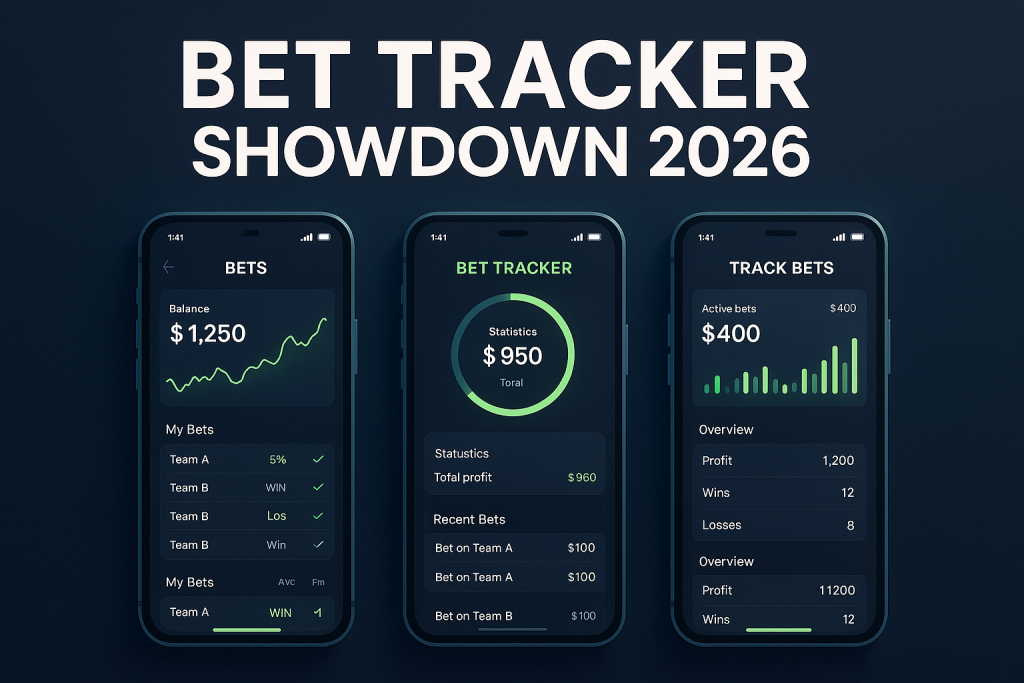
Pikkit
vs SlipSync vs Betstamp 2026: Which Bet Tracker Wins for Sharp
Bettors?
If you can’t measure it, you can’t beat it. That’s the brutal truth
of sports betting in 2026 — sportsbooks now profile and limit sharp
bettors hundreds of wagers earlier than they used to, regulators are
forcing transparency around shadow limits (see the recent
NJ A4002 transparency bill), and Closing Line Value (CLV) has
overtaken win rate as the metric serious bettors actually care
about.
Three bet-tracking platforms dominate the conversation:
Pikkit, SlipSync, and
Betstamp. They look similar on the surface — track
bets, calculate ROI, show CLV — but they’re built for very different
bettor workflows, and picking the wrong one will quietly cost you tens
of thousands of bets worth of accurate data over a season.
This is the head-to-head breakdown for sharp bettors in 2026.
Why Bet Tracking Is
Non-Negotiable in 2026
A quick reality check before we compare apps. The bettor pain points
driving tracker adoption this year:
- AI-driven limits — DarkHorse Odds reporting
suggests books now flag winners after 5–10 sharp plays, not 50. Without
a tracking record, you have no idea which bets actually triggered
it. - CLV is the new ROI — Sportsbooks limit primarily on
beating the closing line. If you can’t see your CLV per book, per
market, per bet type, you’re flying blind. - Multi-book complexity — Most sharps run 6–12 books
simultaneously (DraftKings, FanDuel, Caesars, BetMGM, ESPN BET,
Fanatics, Hard Rock, BetRivers, Fliff, Novig, Kalshi…). A spreadsheet
falls apart fast. - Tax season 2026 — The new loss-deduction cap means
clean records aren’t optional anymore. They’re what separates a
profitable year from an audit headache.
If you’re using +EV
tools like OddsJam, AVO, or Outlier without tracking, you have no
proof those tools are actually working. Picking a tracker is step one of
the sharp stack.
The Three Contenders at a
Glance
| Tracker | Tracking Method | Pricing | Best For |
|---|---|---|---|
| Pikkit | BookSync (API/login-based) | Free + Pro $39.99/mo or $299.99/yr | Mainstream US books, social features |
| SlipSync | Screenshot upload + Chrome extension + manual | Free tier available | Multi-book sharps, any sportsbook |
| Betstamp | Odds-screen click-to-track + manual | Free + Pro (70% off promo) | Top-down bettors, odds shoppers |
Now the deep dive.
Pikkit Review: BookSync Made
Easy
Pikkit’s pitch is simplicity. You connect your sportsbook accounts
via BookSync, and your bets auto-sync — no manual
entry, no screenshots, no spreadsheets.
What Pikkit Does Well
- Auto-sync across 30+ sportsbooks including
DraftKings, FanDuel, BetMGM, Caesars, ESPN BET, bet365, Fanatics, Hard
Rock Bet, and BetRivers - Permanent, unalterable records — Once a bet is
tracked, it can’t be edited or deleted. Big trust signal for
handicappers selling picks - Auto-calculated stats — Profit/loss, ROI, win rate,
units won, CLV by sport, all updated in real time - Social feed — Follow other profitable bettors, see
public records, one-tap copy trades - Pikkit Pro ($39.99/mo) — Adds CLV deep-dive
analysis, scenario analysis, SGP line shopping, odds alerts, promo and
free-bet tracking, and 20+ premium features
Where Pikkit Falls Short
The big one: Pikkit does not support manual bet
entry. That’s by design — they want verified, sync-only records
— but it’s a wall for sharps who bet on:
- Offshore books (Bovada, BetOnline, Heritage) — limited paid
support - Sweepstakes books (Fliff, Novig free play, Rebet)
- Prediction markets (Kalshi, Polymarket)
- Per-head books, private bookmakers, or smaller regional
operators - Discord prop pools or private wagers
If your portfolio is 100% mainstream US books, this isn’t a problem.
If you’ve been limited on the big books and migrated to second-tier or
offshore options (which is the dominant trend in 2026 — see our
sharp-friendly sportsbooks guide), it’s a deal-breaker.
Verdict: Pikkit is the easiest tracker to use if
your books all live inside its sync list. It’s also the best choice for
handicappers selling picks who need a tamper-proof verified record (the
“Whop
Verified Badge” equivalent of bet tracking).
SlipSync
Review: The Sharp’s Spreadsheet With a UI
SlipSync was built for the opposite use case. Instead of locking you
into a sync list, it accepts data from any sportsbook on
Earth — through three methods:
- Screenshot upload — Take a screenshot of any bet
slip, click upload, SlipSync extracts the data - Chrome extension auto-logging — On supported books,
bets log automatically - Manual entry — For everything else, including
private wagers and prediction markets
What SlipSync Does Well
- Universal coverage — Works with any sportsbook,
betting exchange, DFS site, sweepstakes book, or prediction market - Full manual control — Add, edit, and adjust bets
after the fact (essential for correcting OCR mistakes or logging private
bets) - Spreadsheet-style dashboard — Customizable columns,
sortable, exportable. If you came from an Excel tracking workflow, this
is the natural upgrade - No sportsbook login required — You’re not handing
credentials to an aggregator; everything runs locally through the
extension or screenshot OCR - Performance tab — ROI, EV, profit, CLV all
calculated automatically
Where SlipSync Falls Short
- Screenshot OCR isn’t perfect — Expect to manually
correct ~5% of bets, especially on busier slips like teasers and
SGPs - No social feed or one-tap copy trading — This is a
pure tracking tool, not a community - Manual workflow takes a few seconds per bet — Not
as zero-effort as Pikkit’s BookSync
The “Limited-Account Grinder”
Case
This is where SlipSync shines hardest. If you’ve been limited on
DraftKings to $25 max bets but you’re still grinding +EV MLB props,
Pikkit may still sync those bets — but you’ll also need to track your
offshore plays, your sweepstakes plays on Fliff and Novig, and any
Kalshi prediction market plays. SlipSync handles all of that in one
tracker. Pikkit can’t.
Verdict: SlipSync is the sharpest tracker for anyone
running 5+ books or anyone with even a partially exotic stack (offshore,
sweepstakes, prediction markets, private). It’s also the right choice
for bettors who like control more than convenience.
Betstamp Review:
Odds-Screen-First Tracking
Betstamp takes a fundamentally different approach. The product starts
as an odds comparison screen — you see live lines from
50+ sportsbooks side-by-side — and tracking is a layer on top. You
browse to a market, click the best line, enter your stake, and the bet
is auto-logged.
What Betstamp Does Well
- 50+ sportsbooks with live odds — Including
offshore, PPH, DFS, sweepstakes, and exchange odds sets in Pro - Player prop research tool — Compare player props
across the NBA, NFL, MLB, NHL, NCAAF/B, UFC, golf, soccer - Automatic grading — Every bet auto-grades in real
time across major books - Verified records — Like Pikkit, tracked bets can’t
be edited or deleted - CLV tracking by sport, league, bet type,
sportsbook - Free core platform with a 70% off Pro promo running
through Q2 2026
Where Betstamp Falls Short
- The workflow only works if you start at Betstamp —
If you place a bet directly in the DraftKings app and forget to log it
in Betstamp, it’s not in your record - Slower for high-volume grinders — A SlipSync
screenshot or a Pikkit BookSync entry is faster than the click-to-track
flow - Less granular manual entry than SlipSync
The “Top-Down Bettor” Case
If your workflow starts with line shopping — you check every market
for the best price before placing the bet — Betstamp’s odds screen plus
auto-tracking is a natural fit. You’re already at Betstamp; logging the
bet adds zero friction.
Verdict: Betstamp wins for top-down bettors and line
shoppers who want odds comparison and tracking in one place. It loses
for sharps who place bets across many apps without checking Betstamp
first.
Side-by-Side: Which
Tracker for Which Bettor
| Use Case | Best Pick | Why |
|---|---|---|
| Mainstream US books only, want zero effort | Pikkit | BookSync handles everything automatically |
| Selling picks on Whop, need verified record |
Pikkit or Betstamp | Unalterable bet logs build subscriber trust |
| Limited on DK/FD, grinding offshore + sweepstakes | SlipSync | Only one that tracks any book |
| Prediction markets (Kalshi, Polymarket) | SlipSync | Manual + screenshot entry covers everything |
| Top-down line shopping workflow | Betstamp | Odds screen + tracking in one tool |
| Migrating from Excel spreadsheet tracking | SlipSync | Spreadsheet-style UI feels familiar |
| Building social following / copy trading | Pikkit | Built-in social feed and follow features |
| Player prop deep-dive research | Betstamp | Native prop comparison across major sports |
How Bet Tracking
Fits Your 2026 Sharp Stack
A bet tracker is one leg of the three-legged sharp stack. The other
two:
- A +EV / line-shopping tool — OddsJam,
Outlier, AVO, or one of their
alternatives. This is how you find the bets in the first place. - A handicapper community (optional) — If you don’t
have the time to research yourself, a verified Whop handicapper
community can plug the gap. See our best
Whop handicappers guide. - A bet tracker — Pikkit, SlipSync, or Betstamp. Pick
one. Use it religiously.
Without all three, you can’t tell if a +EV tool is actually
delivering edge, if a handicapper service is worth the subscription, or
if your CLV trajectory means a book is about to limit you. The tracker
is the feedback loop that makes everything else measurable.
FAQ
Q: Can I use more than one tracker at once? You can,
but you shouldn’t. Splitting your record across two apps means neither
has a complete picture of your CLV and ROI. Pick one and commit.
Q: Which tracker handles Kalshi and Polymarket bets
best? SlipSync. Both Pikkit and Betstamp focus on traditional
sportsbooks; only SlipSync’s screenshot-and-manual workflow gracefully
handles prediction-market contracts.
Q: I’m a handicapper. Which tracker should I use to prove my
record to subscribers? Pikkit or Betstamp. Both lock bet
records permanently, so a subscriber can verify every bet you’ve ever
placed. SlipSync is editable, which is great for personal tracking but
less defensible publicly.
Q: Is free Pikkit enough, or do I need Pro? Free
covers tracking + basic stats. Pro adds CLV deep-dive analysis, promo
tracking, free-bet expiration alerts, scenario analysis, and SGP line
shopping. If you’re a casual bettor, free is fine. If you’re sharp and
grinding +EV, Pro pays for itself within a month through promo recapture
alone.
Q: How does tracking help avoid getting limited? It
doesn’t directly — but it tells you exactly when you’re approaching the
threshold. If your CLV is creeping up to 3%+ on a specific book, you can
preemptively diversify your action before the limit hammer drops. See our
limited-account survival guide for the playbook.
The Bottom Line
There’s no universal winner — the right tracker depends on your stack
and workflow:
- Pikkit if your books are all mainstream US and you
want zero-effort auto-sync - SlipSync if you bet across many books, offshore,
sweepstakes, or prediction markets - Betstamp if you live in the odds-comparison screen
and want tracking baked in
Pick one this week. Track every bet for 30 days. By June, you’ll know
exactly which of your tools, handicappers, and markets are actually
making you money — and which are quietly bleeding you.
Related Articles
- Best
Sports Betting Tools in 2026: Complete Guide to +EV Software - Best
Sports Handicappers on Whop in 2026: Complete Guide &
Reviews - Best
Sharp-Friendly Sportsbooks in 2026: Where to Bet When You’ve Been
Limited - NJ
Sportsbook Transparency Bill A4002: What Limited Bettors Need to
Know - How
AI Account Profiling Limits Sharp Bettors 300 Wagers Earlier in
2026