The Hard Truth About +EV Betting Timelines
You’ve been placing positive expected value bets for three weeks. Your bankroll is down 15%. The Discord is full of people posting profits while you’re staring at red numbers.
Sound familiar?
Here’s what most +EV betting guides won’t tell you: short-term results mean absolutely nothing. Not after a week. Not after a month. Sometimes not even after three months.
In this guide, we’ll break down exactly how long it takes for +EV betting to become profitable, why you’re probably losing right now despite doing everything right, and the realistic timeline you should expect before seeing consistent results.
Why +EV Bettors Lose Money (At First)
Let’s start with a concept that trips up every new +EV bettor: variance.
Imagine flipping a coin that lands heads 55% of the time. You have a clear edge. But flip it 20 times, and you might get only 8 heads. That’s not the coin being broken—that’s just what happens in small samples.
Sports betting works the same way, except the edges are much smaller. Most +EV opportunities have edges between 1-5%. That means:
- At a 3% edge, you need roughly 1,000 bets before variance smooths out
- At a 5% edge, you might see consistency around 500 bets
- At a 1% edge, you could need 2,000+ bets to confirm profitability
If you’re placing 5-10 bets per day, that’s 3-6 months minimum before your results become statistically meaningful.
The Sample Size Problem Nobody Talks About
Here’s a table that shows the probability of being profitable after different numbers of bets, assuming a consistent 3% edge:
| Number of Bets | Probability of Profit | Expected Variance Range |
|---|---|---|
| 100 bets | 58% | -15% to +20% |
| 250 bets | 65% | -8% to +15% |
| 500 bets | 74% | -4% to +10% |
| 1,000 bets | 83% | -1% to +7% |
| 2,500 bets | 93% | +1% to +5% |
Notice something shocking? After 100 bets with a real edge, you still have a 42% chance of being in the red. That’s nearly a coin flip on whether you’re profitable despite doing everything correctly.
This is why so many bettors quit too early. They see negative results after a month, assume the system doesn’t work, and move on—right before their edge would have started compounding.
Realistic Timeline: Month by Month Breakdown
Here’s what to actually expect if you’re placing 10 +EV bets per day with an average 3% edge:
Month 1 (300 bets): The Chaos Zone
Results will be all over the place. You might be up 20% or down 25%. Both are normal. Do not judge your strategy during this period.
Focus on:
- Tracking every bet meticulously
- Verifying your edge calculations
- Building betting discipline
Month 2-3 (600-900 bets): Pattern Emergence
Variance starts calming down. If your edge is real, you should see your results trending toward expected value. Still possible to be negative, but the swings become less dramatic.
Focus on:
- Analyzing which bet types perform best
- Identifying any systematic errors
- Optimizing bet sizing
Month 4-6 (1,200-1,800 bets): Confidence Building
By now, your results should reflect your actual edge. If you’re still significantly negative after 1,500 bets, something might be wrong with your edge identification (not just variance).
Focus on:
- Scaling bet sizes if results confirm edge
- Expanding to new sportsbooks
- Reinvesting profits
Month 6-12: Compounding Phase
This is where +EV betting becomes powerful. With confirmed edge and proper bankroll management, you can start increasing stakes and watching profits compound.
Why Most +EV Bettors Fail (And How to Avoid It)
Mistake 1: Judging Results Too Early
The biggest killer. If you quit after a bad month, you’ll never see the edge materialize. Set a minimum commitment of 1,000 bets before evaluating.
Mistake 2: Poor Bankroll Management
Even with positive EV, betting 10% of your bankroll per bet can bust you during variance. Most professionals recommend 1-2% per bet maximum. Our complete bankroll management guide covers optimal unit sizing.
Mistake 3: Chasing Bigger Edges Only
A 1% edge on a liquid line is often more valuable than a 5% edge that moves instantly. Volume matters as much as edge size.
Mistake 4: Not Tracking Properly
If you’re not tracking closing line value (CLV), you have no idea if your bets actually had edge. The line at the time you bet means nothing—what matters is where it closed.
Mistake 5: Getting Limited Too Fast
Sportsbooks limit winning bettors. If you’re too aggressive early, you’ll burn through betting privileges before reaching statistical significance. Our guide on avoiding sportsbook limits can help you stay under the radar longer.
Tools That Speed Up The Process
The right software dramatically reduces the time to profitability by:
- Finding more +EV opportunities (more bets = faster convergence)
- Calculating edges accurately (avoiding false positives)
- Tracking CLV automatically (verifying your edge is real)
Here are the top options we recommend:
OddsJam
The industry standard for +EV betting. Excellent for beginners with clear edge percentages and automatic tracking. Higher price point ($199/month) but comprehensive features. Read our full OddsJam review.
AVO (Arbs vs Odds)
More affordable alternative that’s become a favorite among serious bettors. Strong odds comparison and +EV identification at a lower price point.
Outlier
Excellent for player props specifically. If you focus on props, Outlier’s projection models offer some of the best edge identification available. Full Outlier review here.
For a detailed comparison of all three platforms, see our OddsJam vs AVO vs Outlier comparison guide.
What About Using Handicappers Instead?
Some bettors prefer following professional handicappers rather than doing their own +EV analysis. This can work, but comes with different variance considerations.
With handicappers, you’re typically getting fewer bets (3-5 plays per day vs. 10-20 with +EV software), which means longer time to statistical significance. However, if the capper has genuine edge, the same principles apply.
Services like PropFellas and DataWise focus on data-driven picks with transparent records. Check our guide to the best handicappers on Whop for verified options.
The Math Behind Your Timeline
For the mathematically inclined, here’s the formula that governs your convergence:
Standard Error = 1 / √(number of bets)
This means your results become roughly twice as accurate (half the variance) when you quadruple your sample size. That’s why the jump from 100 to 500 bets matters so much more than 500 to 600.
For a 3% edge to be statistically significant at 95% confidence, you need approximately:
- 1,000 bets if tracking overall profit
- 500 bets if tracking CLV (more precise metric)
Setting Realistic Expectations
Based on typical +EV betting results across thousands of bettors, here’s what to expect annually with consistent effort:
| Starting Bankroll | Expected Annual ROI | Realistic Range |
|---|---|---|
| $1,000 | 5-8% | $50-80 profit |
| $5,000 | 5-8% | $250-400 profit |
| $10,000 | 5-8% | $500-800 profit |
| $25,000+ | 5-10% | $1,250-2,500 profit |
These numbers assume you’re not getting limited and can maintain betting volume. Reality often involves limits cutting into your expected value, which is why avoiding limits is crucial.
The Bottom Line
If you’re asking “how long until +EV betting works,” here’s your answer:
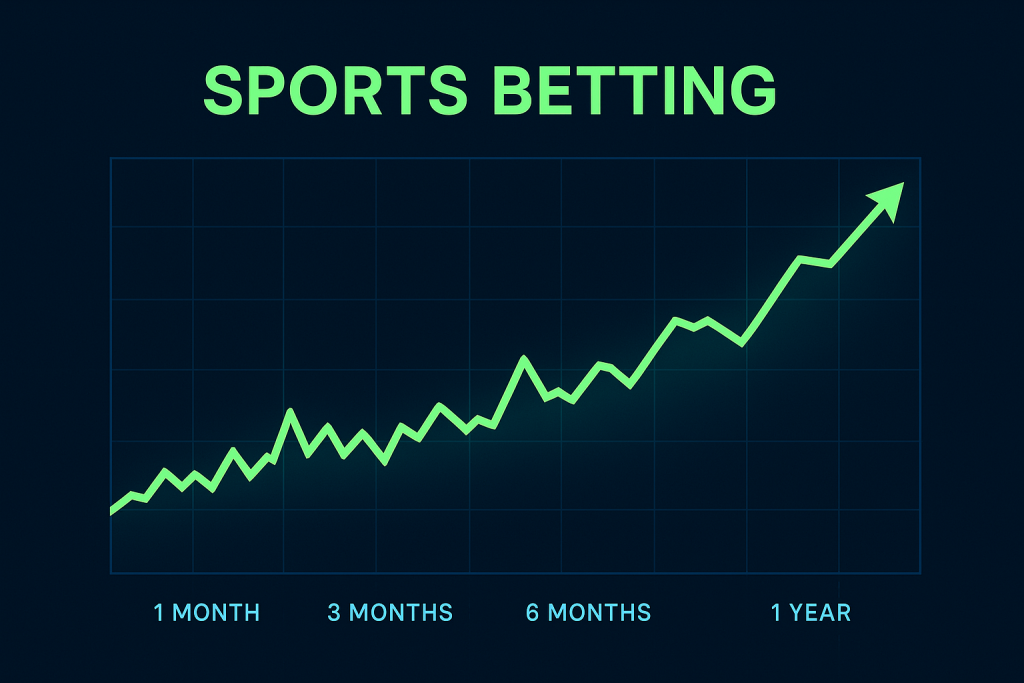
- Minimum viable sample: 500-1,000 bets (2-4 months of active betting)
- Statistical confidence: 1,500-2,500 bets (5-8 months)
- Full edge realization: 3,000+ bets (10-12 months)
The bettors who succeed aren’t necessarily smarter—they’re just patient enough to let the math work. Stick to the process, manage your bankroll conservatively, and don’t let short-term variance convince you the system is broken.
Your edge is real. You just need to give it time to show up.
Related Articles
- Why Your +EV Betting Isn’t Working: 5 Mistakes Killing Your Edge
- Bankroll Management for Sports Betting 2026: Complete Guide to Unit Sizing
- Should You Max Your Boosts? The Real Bankroll Math
- Best Sports Betting Tools 2026: Complete Guide to +EV Software
- OddsJam vs AVO vs Outlier: Best +EV Betting Software Compared